
Cushions
Not all cushions serve the same purpose: pillows support the head during sleep, while inner cushions give sofa and decorative cushions their shape. We offer both in coordinated sizes and, on request, in custom dimensions — the pillows from our six duvet collections with fillings ranging from TENCEL™ Lyocell and wool to goose down, and the DekoDream inner cushion with its washable fibre-ball filling. The cushion guide on this page helps you choose the right type, height and size for your needs.
2 cushion types · pillows in 20 sizes · inner cushions in 10 sizes · also available in custom dimensions
 60,00 € – 309,00 €
- 23,00 € – 61,00 €
- 9,00 € – 20,00 €
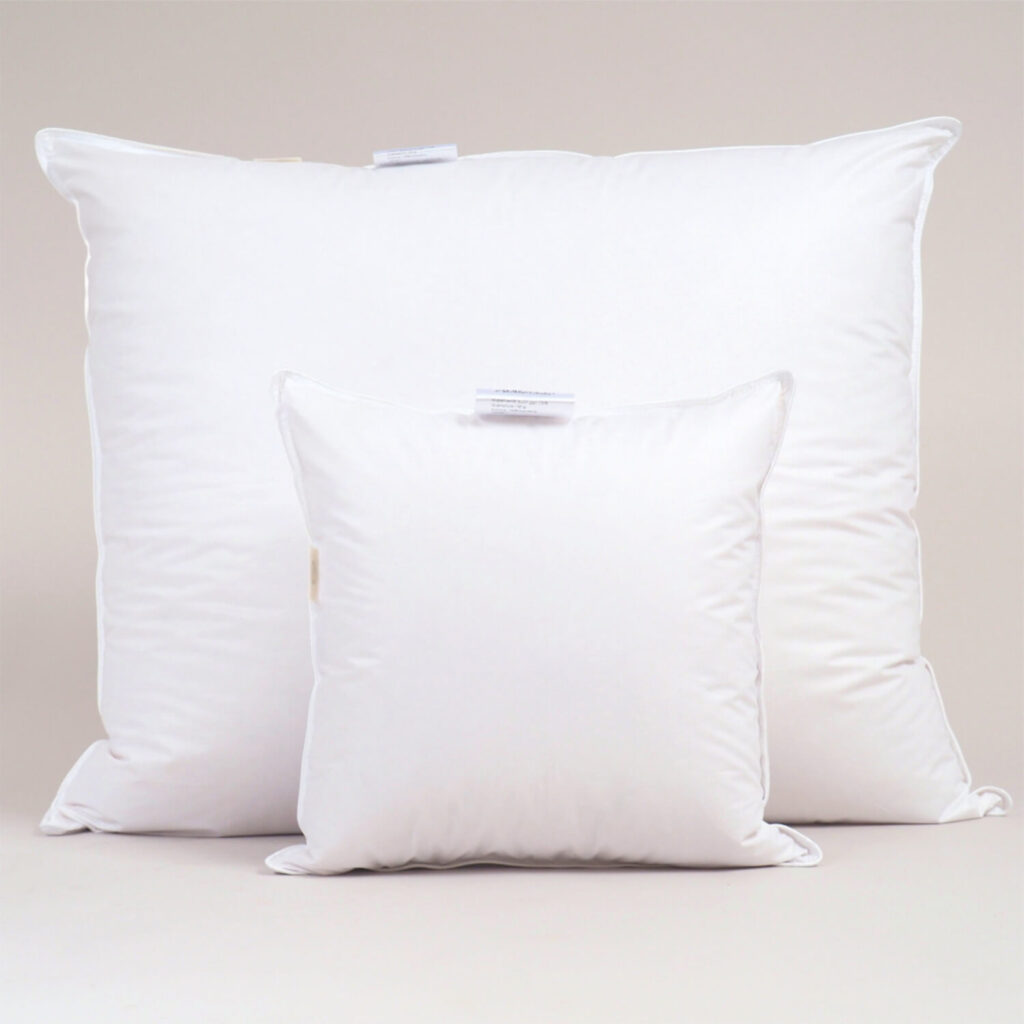
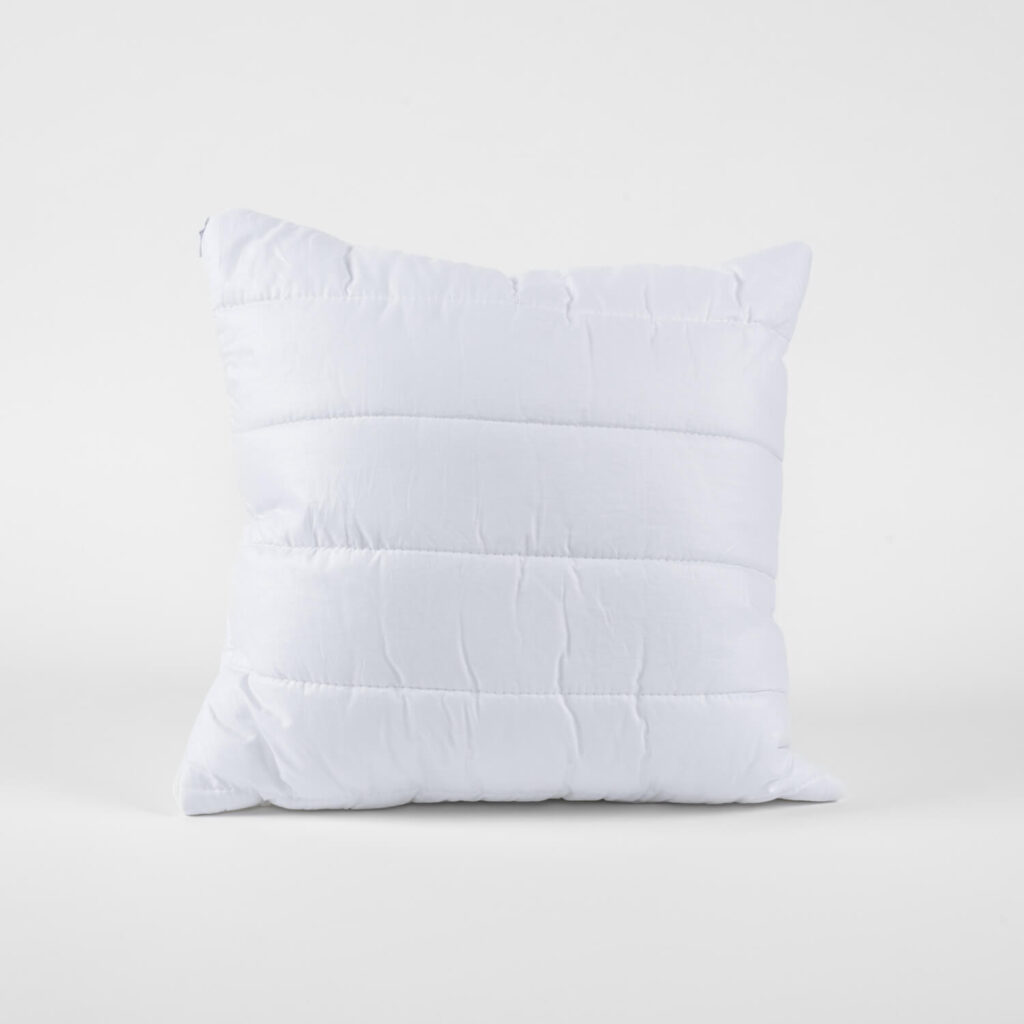

Sleeping pillow or inner cushion?
Sleeping pillows are designed for sleep: six collections, ranging from TENCEL™ Lyocell with a supportive filling to Polish and Siberian goose down, available in 20 sizes and selected based on sleep position and height.
Inner cushions are the cushion within the cushion: the filling that gives sofa and decorative cushions their shape, while the outer cover defines the look. DekoDream is washable at up to 95 °C and available in 10 sizes.
We are preparing our own decorative cushions, including designs in pure wool; they will be available under Bedspreads & Decorative Cushions.
Unsure whether to choose a sleeping pillow or an inner cushion, or which filling or size is right?
Oliwia, our Atelier Concierge, will advise you personally. Request personal advice.
The pillow guide: which pillow is right for you?
The right sleeping pillow depends on your sleep position, shoulder width, mattress and the height these factors call for. As a general guideline, the head and spine should form a straight, relaxed line in your usual sleep position. Side sleepers generally choose a higher pillow, while stomach sleepers usually need a flatter one. An adjustable filling allows the height to be tailored rather than guessed. With inner cushions, the size is determined by the cover. This guide explains both choices.
The rule of thumb: a straight, relaxed line
Whether a pillow is suitable becomes clearer when viewed from the side: the head and spine should form a straight, relaxed line in your usual sleep position, with the head neither raised nor angled. This general guideline does not replace trying the pillow in person, but it makes the choice more precise. Rather than focusing only on whether a pillow feels soft or firm, consider the height required by your shoulder and mattress. The more deeply your shoulder sinks into the mattress, the lower the pillow can be.
For side sleepers
When sleeping on your side, the shoulder rests on the mattress, while the pillow fills the space between the head and shoulder. A higher pillow is therefore usually chosen for side sleepers: broader shoulders and a firmer mattress may require more height, while narrower shoulders and greater sinking into the mattress may require less. The flatter 40 × 80 cm format keeps the shoulders on the mattress. With the Dreamy pillow, the height can be adjusted by changing the amount of filling; the Royal pillow has a traditionally firmer character.
For back sleepers
When sleeping on your back, a medium-height pillow is usually chosen. It allows the back of the head to sink in slightly and gives the neck room without pushing the head noticeably forwards. Here too, an adjustable filling allows the height to be fine-tuned.
For front sleepers
When sleeping on your front, the head turns to one side, and additional pillow height increases this rotation. Front sleepers therefore generally choose a flatter pillow: either a lightly filled pillow or, as is sometimes preferred, no pillow at all. The amount of filling in the Dreamy pillow can be reduced considerably for this sleep position; the smaller 40×60 cm format may also feel more comfortable than a larger standard size.
During pregnancy
Many women sleep on their side during pregnancy, so the usual guidance for side sleepers generally applies: sufficient height between the head and shoulder, with the shoulder resting on the mattress. We do not offer specialist side-sleeper or nursing pillows; our sleeping pillows can be chosen for side sleeping as described, and the Dreamy pillow allows the height to be adjusted. In case of discomfort, a midwife or doctor is the appropriate person to consult — a pillow is a furnishing item, not a treatment.
Which pillow size should you choose?
50×75 cm is a widely used pillow size in the UK, while 80×0 cm is the traditional German square format. When sleeping on your side, the generous 80×80 cm size may mean that the shoulders rest on the pillow as well. The flatter 40×80 cm format keeps the shoulders on the mattress and is often chosen as a more compact alternative. Smaller sizes such as 40×60 cm provide more focused support and are easier to travel with. All 20 sizes, from 30×50 to 80×80 cm, are available in our pillow category — with a matching pillowcase in the same size for every pillow.
Inner cushion size: matching the cover or slightly larger?
For sofa and decorative cushions, the cover size provides the starting point. An inner cushion in the same size fills the cover smoothly and evenly. For a fuller, more generously shaped appearance, an inner cushion slightly larger than the cover is often chosen; both approaches are established.
For square covers, 45×45 cm is a familiar size in the UK, alongside formats such as 40×40 and 50×50 cm. Rectangular covers are often paired with sizes such as 30×50 or 40×60 cm.
Pillow height and filling: adjust rather than guess
A pillow’s height is determined by both the amount and the type of filling. With the Dreamy pillow, the amount of filling can be adjusted, allowing the height to be tailored to your sleep position rather than choosing between a pillow that feels too high or too flat. The Royal pillow, filled with Polish goose down, has a traditionally firmer character and is supplied with a fixed amount of filling.
We also make pillows in custom dimensions, subject to technical feasibility. Let us know the size you require, and we will confirm the price before you place your order. Request a custom size.
Frequently asked questions about cushions
Sleeping pillow or inner cushion — what is the difference?
A sleeping pillow supports the head during sleep and is chosen based on sleep position, height and filling. An inner cushion is the cushion within the cushion: the filling that gives sofa and decorative cushions their shape — the cover defines the look.
How high should a pillow be for side sleepers?
High enough to fill the space between the head and shoulder while keeping the spine in a straight, relaxed line when viewed from the side. The right height depends on shoulder width and the mattress — an adjustable filling allows the height to be tailored.
50x75, 80x80 or 40x80 cm — which size?
50×75 cm is a widely used format in the UK, while 80×80 cm is the traditional German square size. The flatter 40×80 cm format keeps the shoulders on the mattress and is therefore often chosen by side and back sleepers. We offer all three sizes, along with 17 others.
Which pillow is suitable during pregnancy?
The usual guidance for side sleepers generally applies: the pillow should provide sufficient height between the head and shoulder, while the shoulder remains on the mattress. We do not offer specialist pregnancy or nursing pillows; in case of discomfort, a midwife or doctor is the appropriate person to consult.
Can I adjust the pillow height later?
Yes, with the Dreamy pillow — its filling can be adjusted to change the height. The Royal pillow has a traditionally firmer character and retains its set amount of filling.
Which inner cushion size should I choose for my cushion cover?
An inner cushion in the same stated size fills the cover smoothly and evenly. For a fuller appearance, one size larger is often chosen. Both approaches are common.
Do you make pillows and inner cushions in custom sizes?
Yes, where technically feasible. Send us the dimensions you require, and we will confirm the price before you place your order.