
Flat sheets
A flat sheet is a bed sheet in its simplest form: a smooth rectangle without elastic. Used as a bottom sheet, it is tucked firmly around the mattress; used as a top sheet, it rests lightly over the body. We offer four sizes up to 314 cm in length in four fabrics and also make each sheet to your measurements. Every sheet is sewn to order in our ateliers in Germany and Poland.
4 sizes · up to 314 cm in length · for use as a bottom or top sheet · 4 fabrics · percale in 13 colours · from €50
 97,00 € – 150,00 €
- 90,00 € – 144,00 €
- 53,00 € – 78,00 €
- 53,00 € – 78,00 €
- 53,00 € – 78,00 €
- 50,00 € – 69,00 €
- 50,00 € – 69,00 €
- 50,00 € – 69,00 €
- 50,00 € – 69,00 €
- 50,00 € – 69,00 €
- 50,00 € – 69,00 €
- 50,00 € – 69,00 €
- 50,00 € – 69,00 €
- 50,00 € – 69,00 €
- 50,00 € – 69,00 €
- 50,00 € – 69,00 €
- 50,00 € – 69,00 €
- 50,00 € – 69,00 €

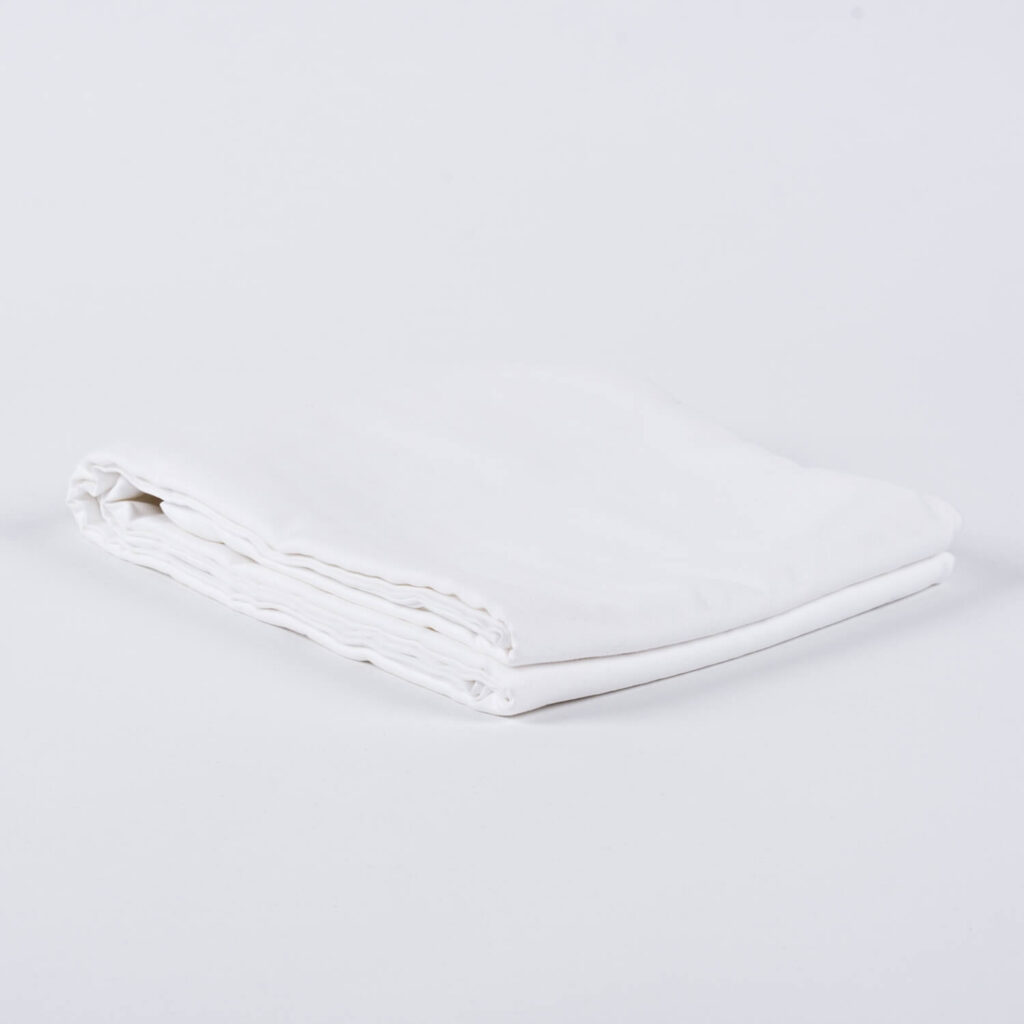
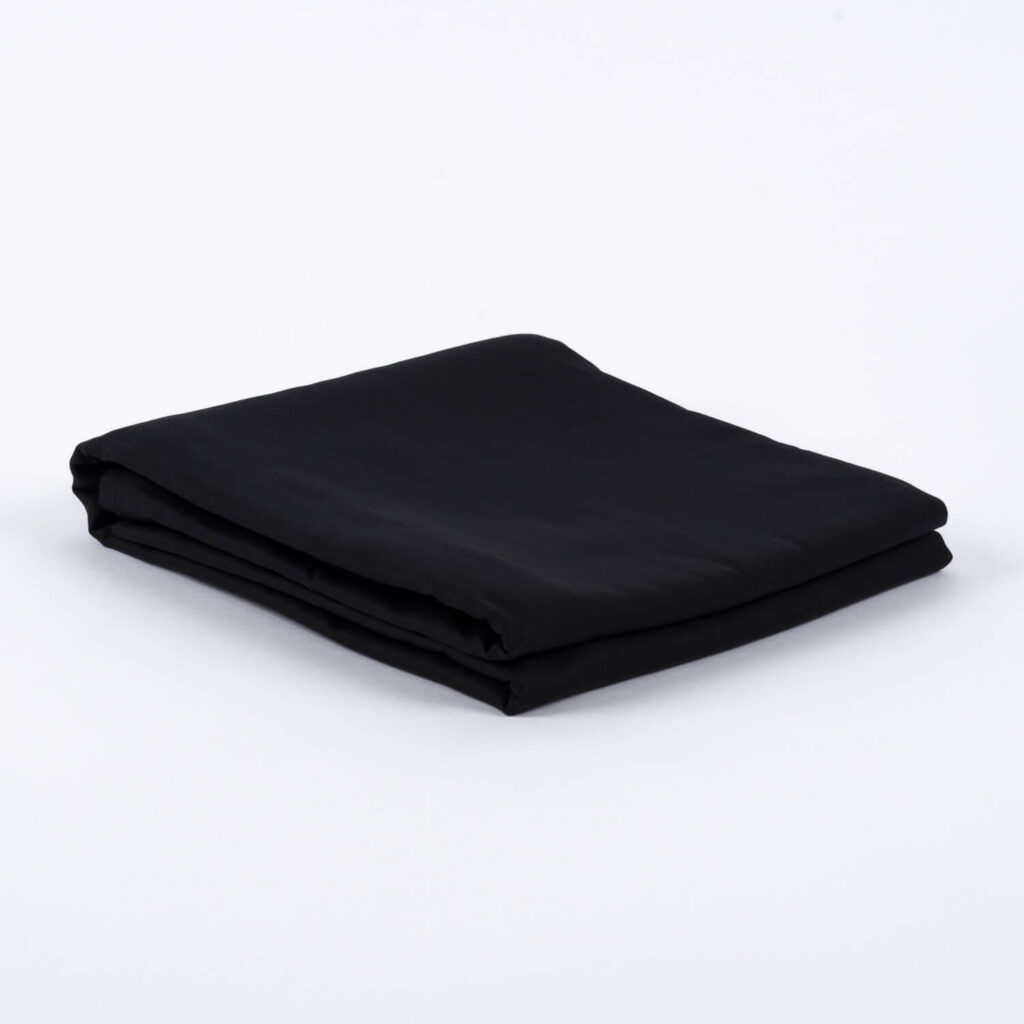
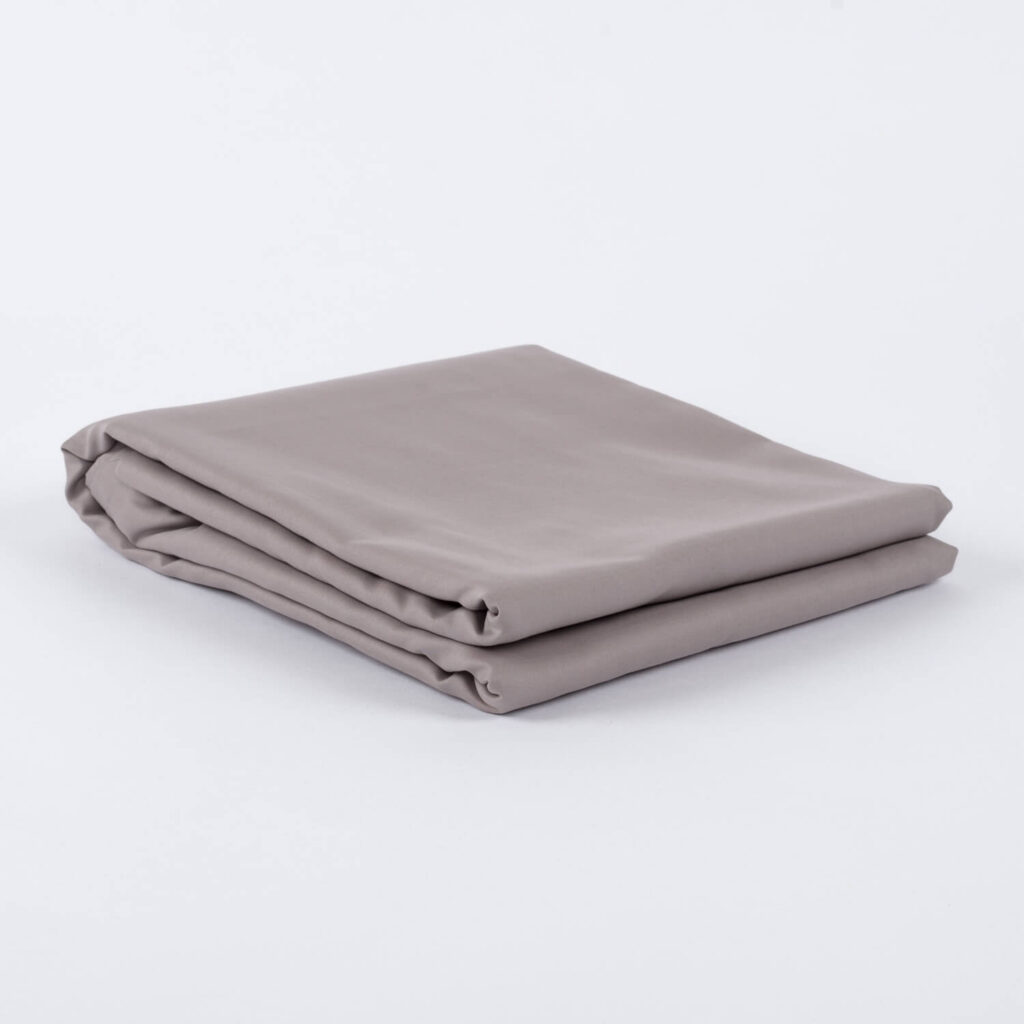
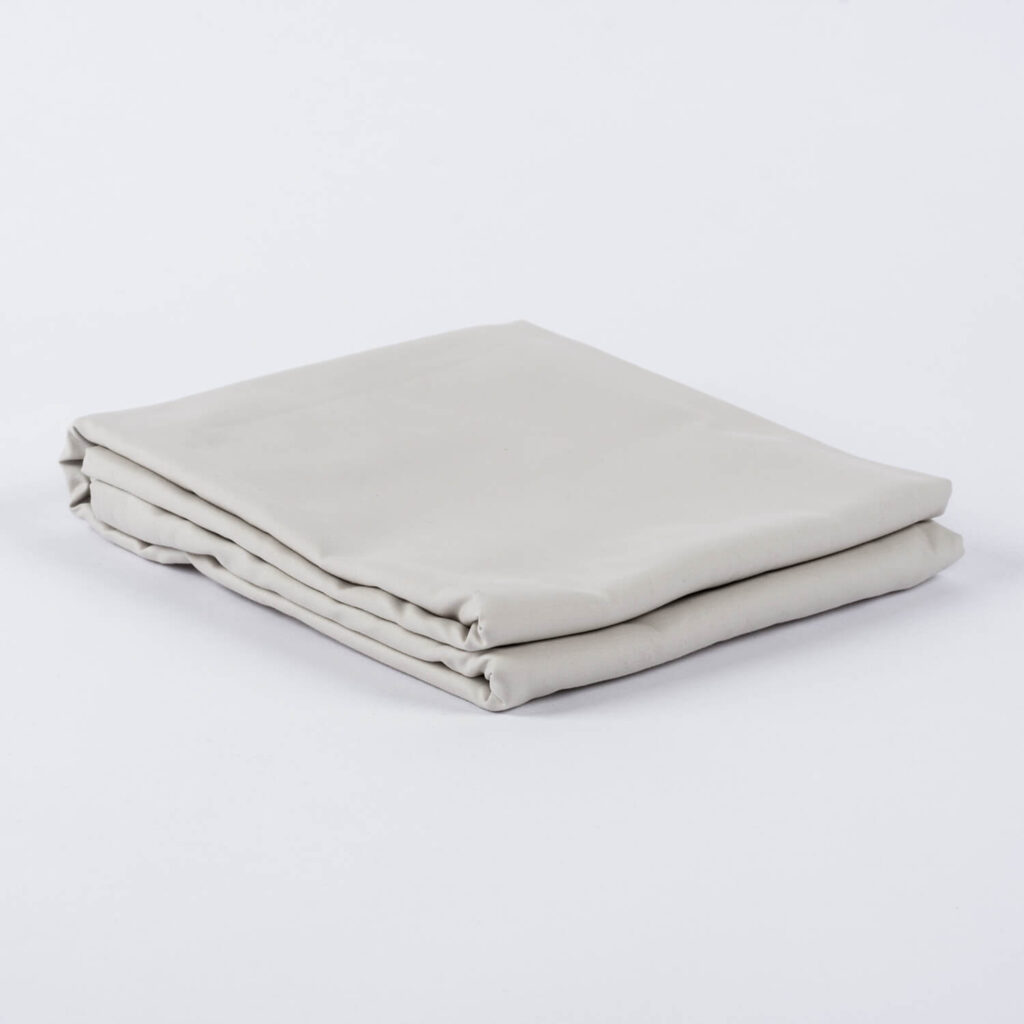
How to find the right flat sheet
Unlike a fitted sheet, the stated dimensions refer to the sheet laid out flat, not to the mattress. Measure the mattress itself: the sheet needs enough fabric on each side to extend beyond its height and tuck securely underneath. Our sizes are generously cut for this purpose and are suitable for mattresses up to approximately 27 cm in height. For higher mattresses, choose the next larger size or send us your measurements.
Our flat sheets
On a mattress 160 cm wide, there is an overhang of approximately 47 cm on each side, with sufficient fabric at the head and foot to tuck securely underneath. If your mattress falls between two size recommendations, we will be pleased to help you choose the most suitable option. Simply provide the width, length and height of the mattress and let us know whether the sheet will be used as a bottom sheet, a top sheet or both.
Our size guide explains which dimensions are commonly used for different bed sizes.
How to make the bed with a classic flat sheet
A flat sheet is held securely in place by the fabric tucked beneath the mattress and by neatly folded hospital corners.
1. Position the sheet. Lay it centrally on the mattress, leaving an equal overhang on both sides.
2. Tuck in the ends. Lift the mattress slightly at the head and foot and smooth the fabric underneath.
3. Form the hospital corner. Lift the fabric beside the corner onto the mattress to form a triangle, then tuck the section beneath it under the mattress.
4. Secure the corner. Fold the triangle down and tuck it firmly beneath the mattress together with the fabric hanging at the side. Repeat at the remaining corners, then smooth the sheet from the centre outwards.
A hospital corner is most clearly defined in a smooth, closely woven fabric. A sufficiently generous tuck keeps the sheet securely in place under the weight of the mattress.
Using the sheet as a light summer cover
In many homes in Italy, France and Spain, a top sheet traditionally forms part of the made bed. On warm nights, it is used on its own; on cooler nights, it lies between the body and a duvet or blanket. With a fabric weight of 120 to 170 g/m², the sheet provides a light covering for warm weather. When used in this way, the width should be chosen according to the bed and the desired overhang at the sides. As a guide, 180×290 cm is suitable for one person and 254×294 cm for two people.
Flat sheets in four fabrics
Percale is woven in a plain weave, with warp and weft threads crossing evenly to create a matte, dry surface. At 120 g/m² and 230 TC, the fabric is smooth and closely woven.
Cotton sateen is made from cotton woven in a sateen weave. Longer thread floats at the surface give the fabric its smooth feel and subtle lustre. Sateen refers to the weave, not the fibre. At 320 TC and a fabric weight of 120 g/m², it has a smooth, quietly lustrous appearance.
MicroModal is an especially fine form of modal, a regenerated cellulose fibre of wood origin. At 125 g/m², the fabric has a lighter, more fluid drape than our cotton sateen. More information about the modal fibre we use can be found on our page about Tencel bedding.
Linen made from Western European flax has a matte appearance and a natural texture that can be both seen and felt. Our linen, currently available in white, has a fabric weight of 170 g/m², making it the heaviest of the four fabrics.
The cotton used for our percale and cotton sateen comes from the United States and is associated with the U.S. Cotton Trust Protocol. The flax for our linen is grown in France and Belgium, while the cellulose used for MicroModal comes from European beechwood. The fabrics are woven in Northern Italy before being cut and sewn in our ateliers.
All four fabrics are certified to OEKO-TEX® Standard 100; the sewing thread is certified as well.
The way the fabrics appear in the light, their texture and their feel are best judged from our fabric samples.
Sizes and custom sizes
We offer four sizes, each available in all four fabrics: 180×290 · 214×294 · 254×294 · 294×314 cm — width × length. The corresponding mattress dimensions are shown in the table above.
We also make flat sheets in custom sizes, provided the requested dimensions are technically feasible. Simply provide the width, length and height of your mattress, and we will determine the appropriate sheet size. For special shapes, we may also require a dimensioned drawing or photograph; we will confirm the price before you place your order. Oliwia, our Atelier Concierge, will reply personally. Request a custom size.
For hotels and other commercial clients, we have a dedicated page: Hotel & B2B.
Colours
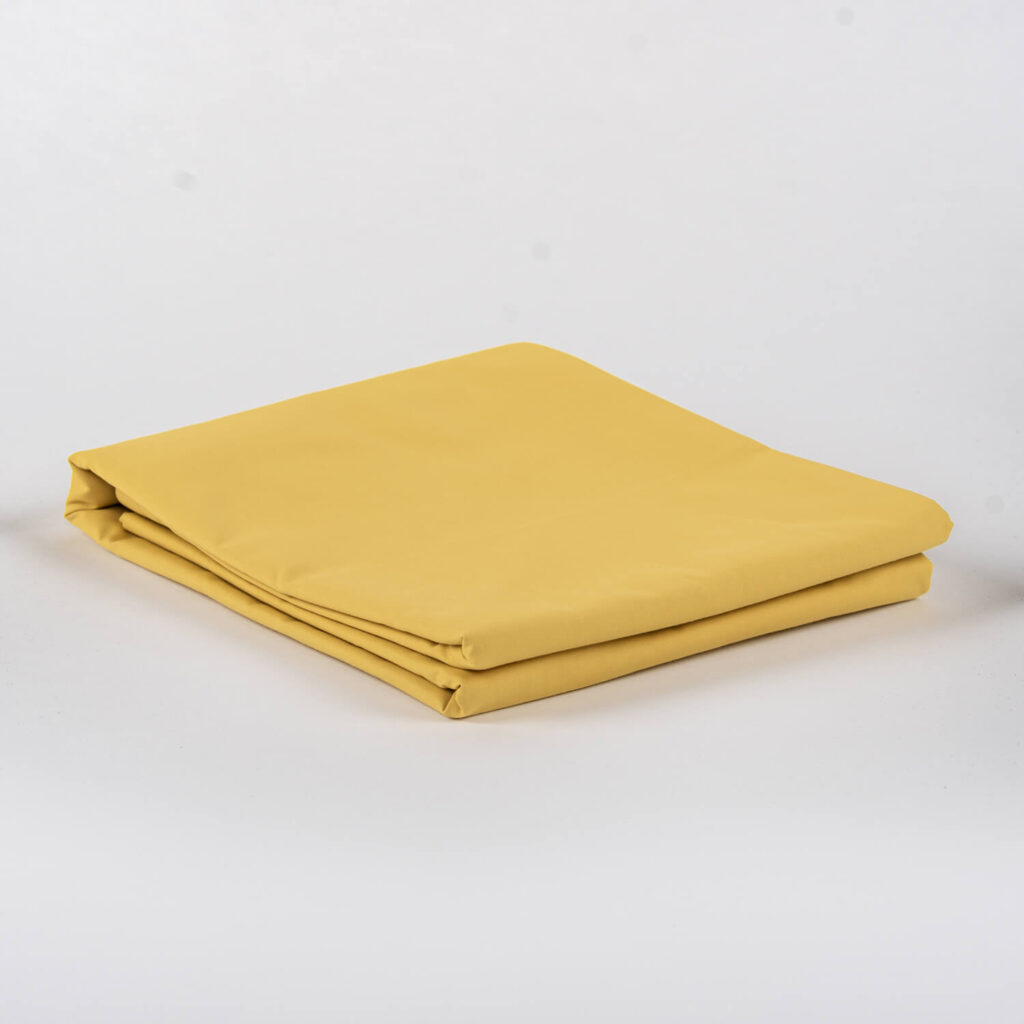
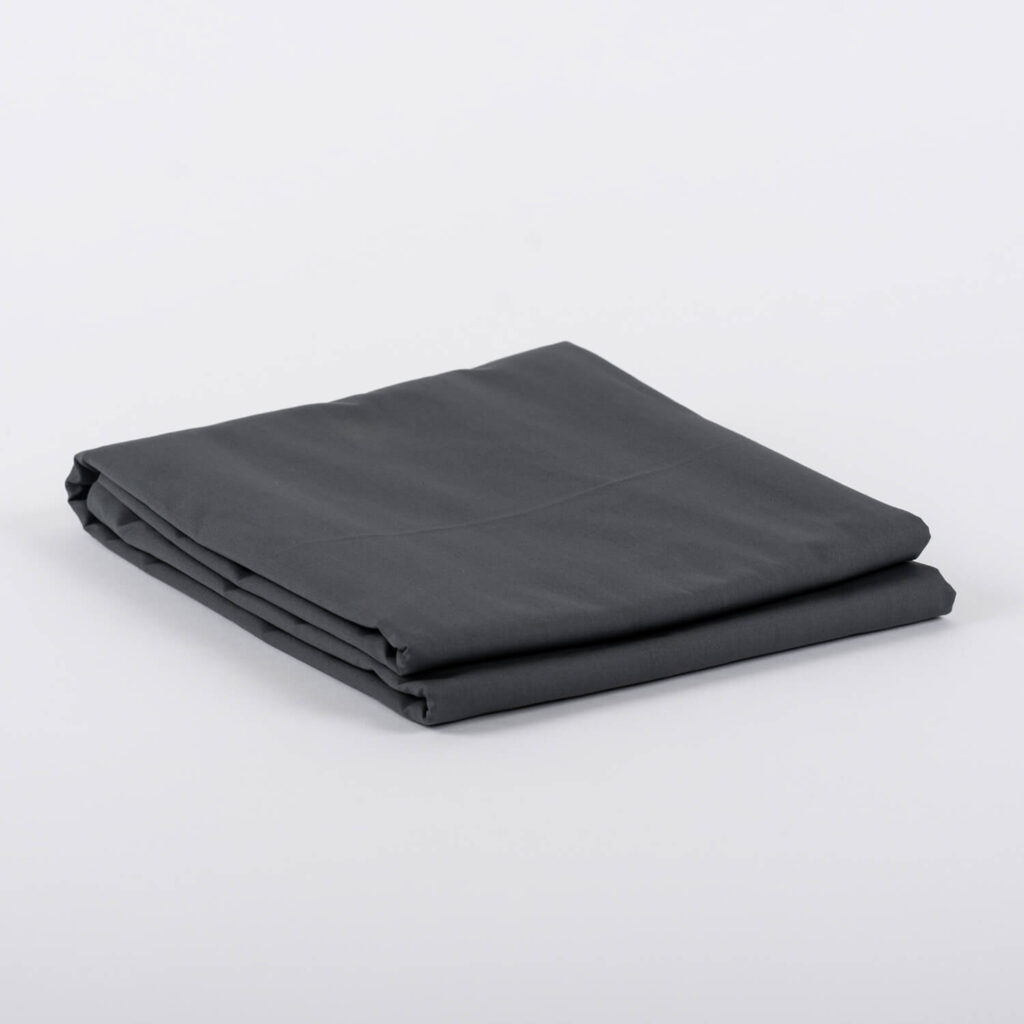
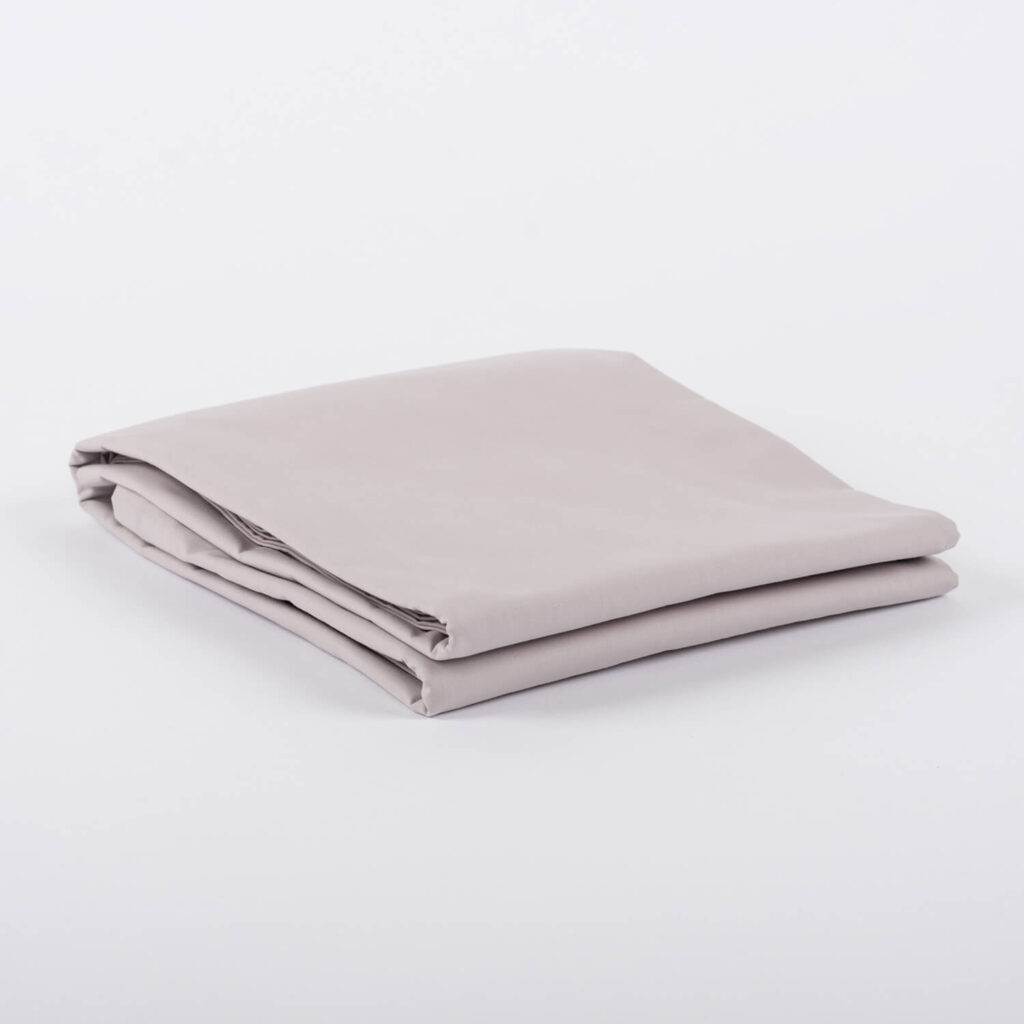
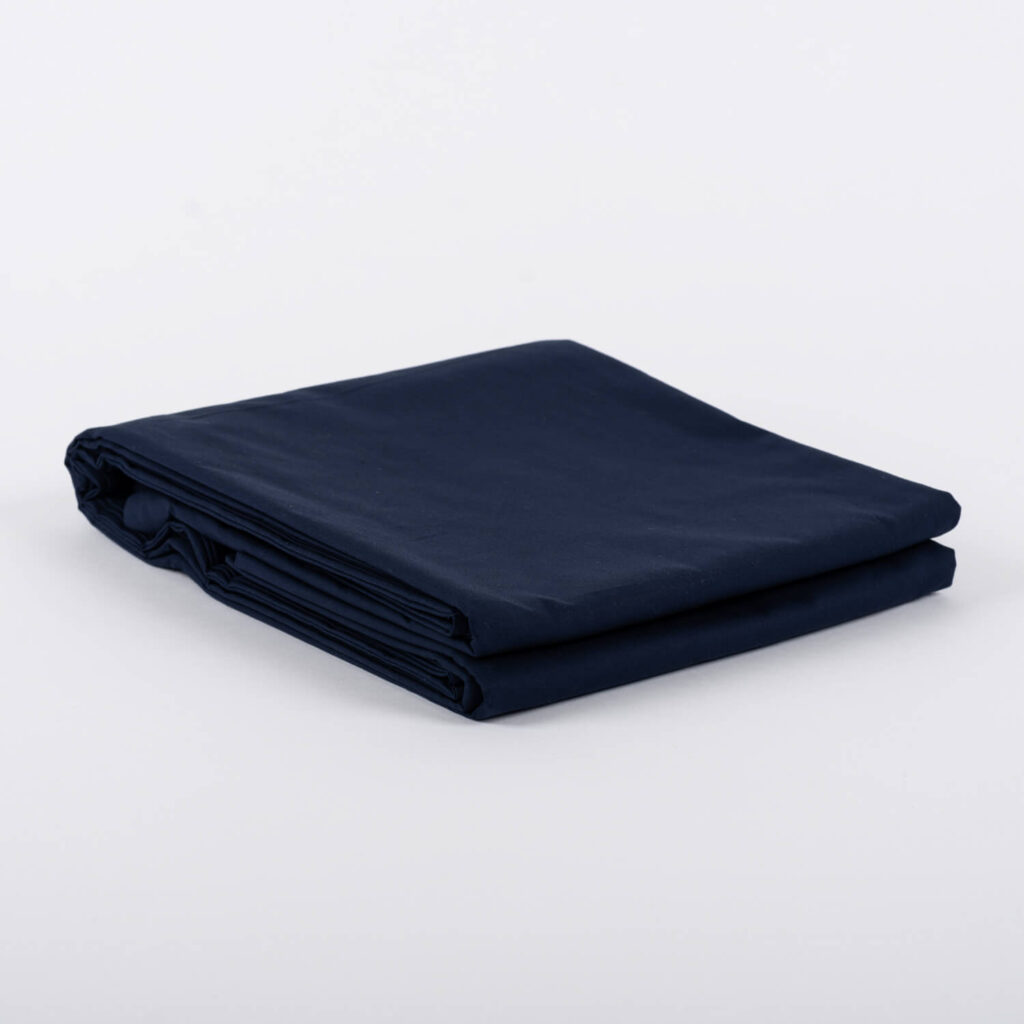
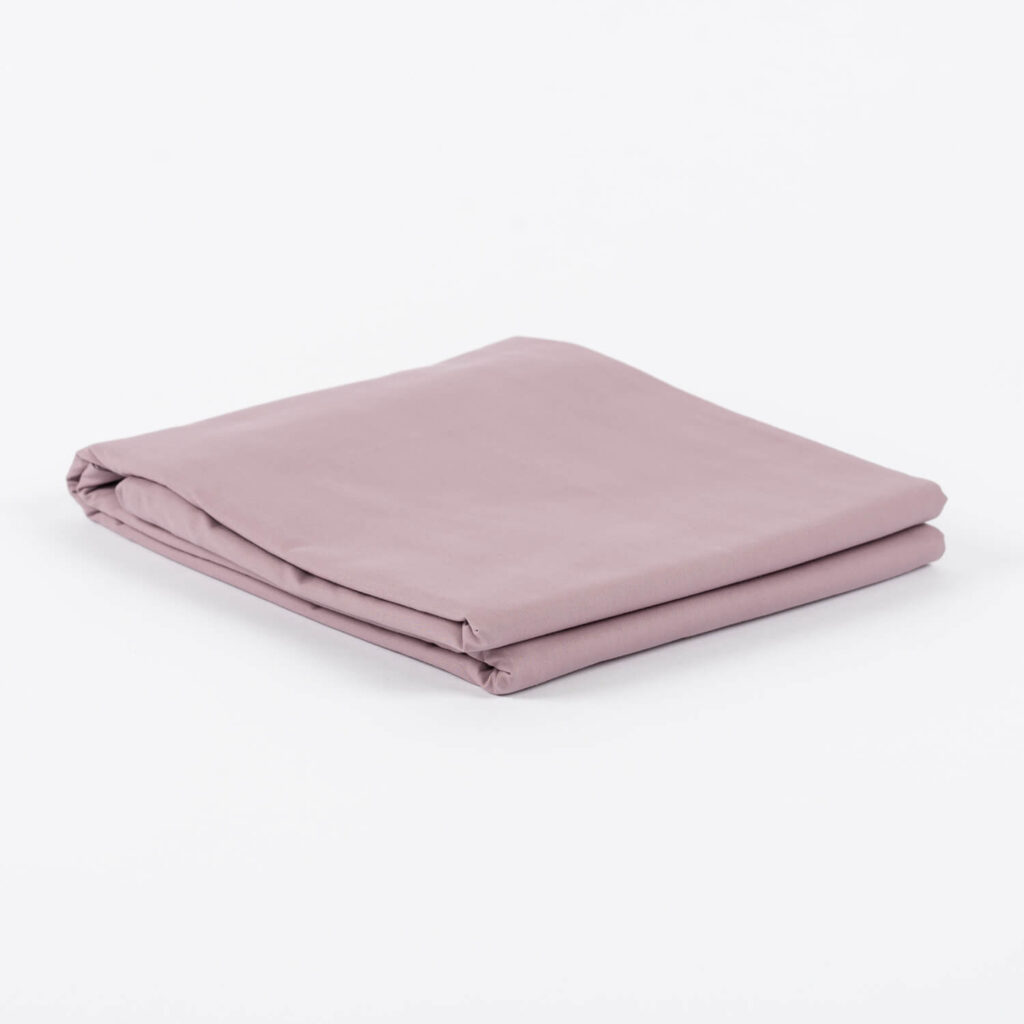
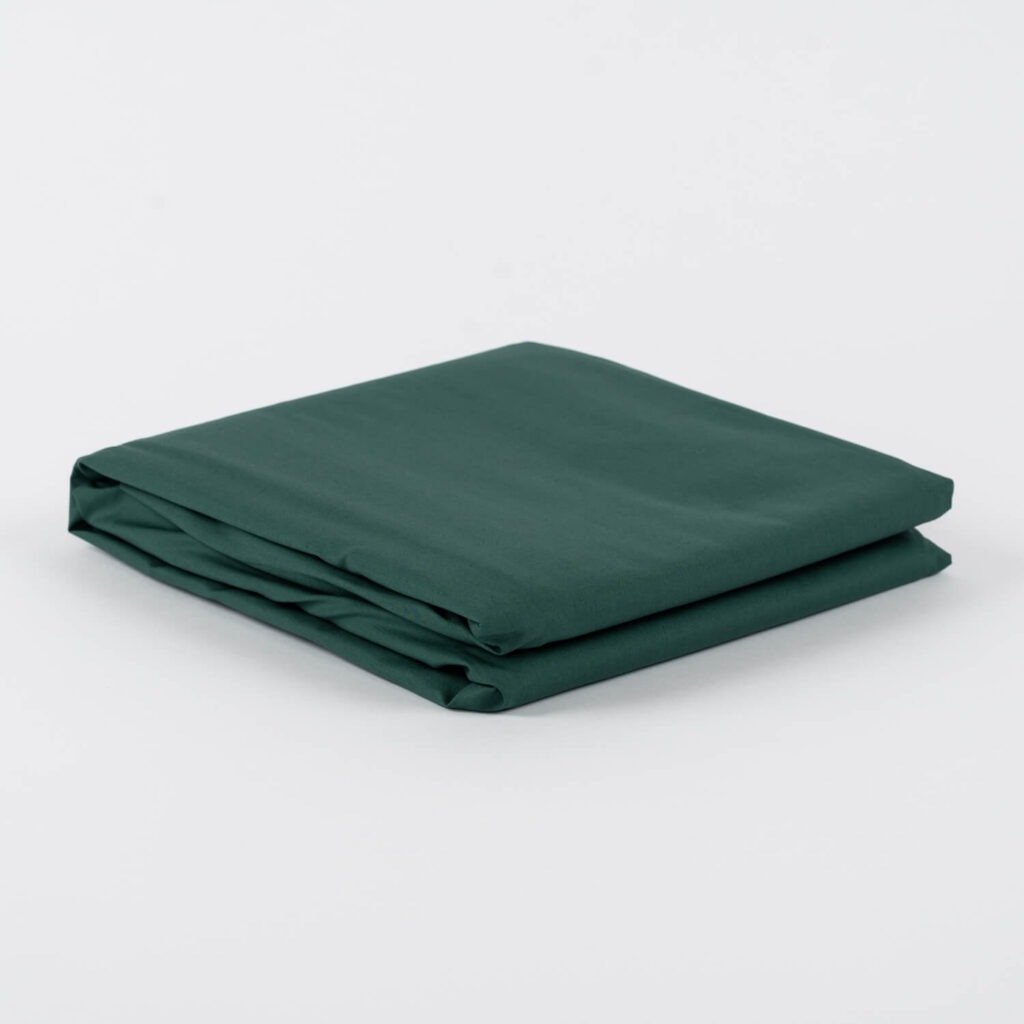
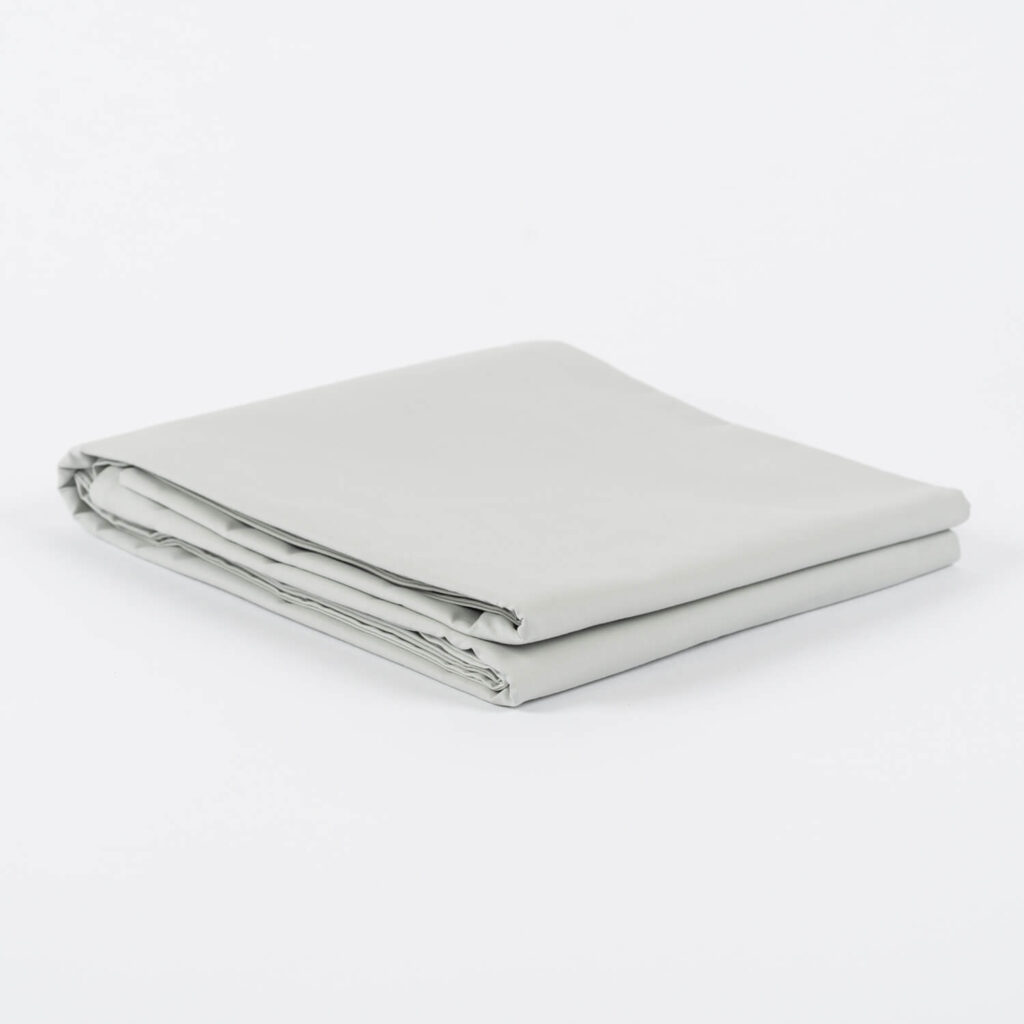
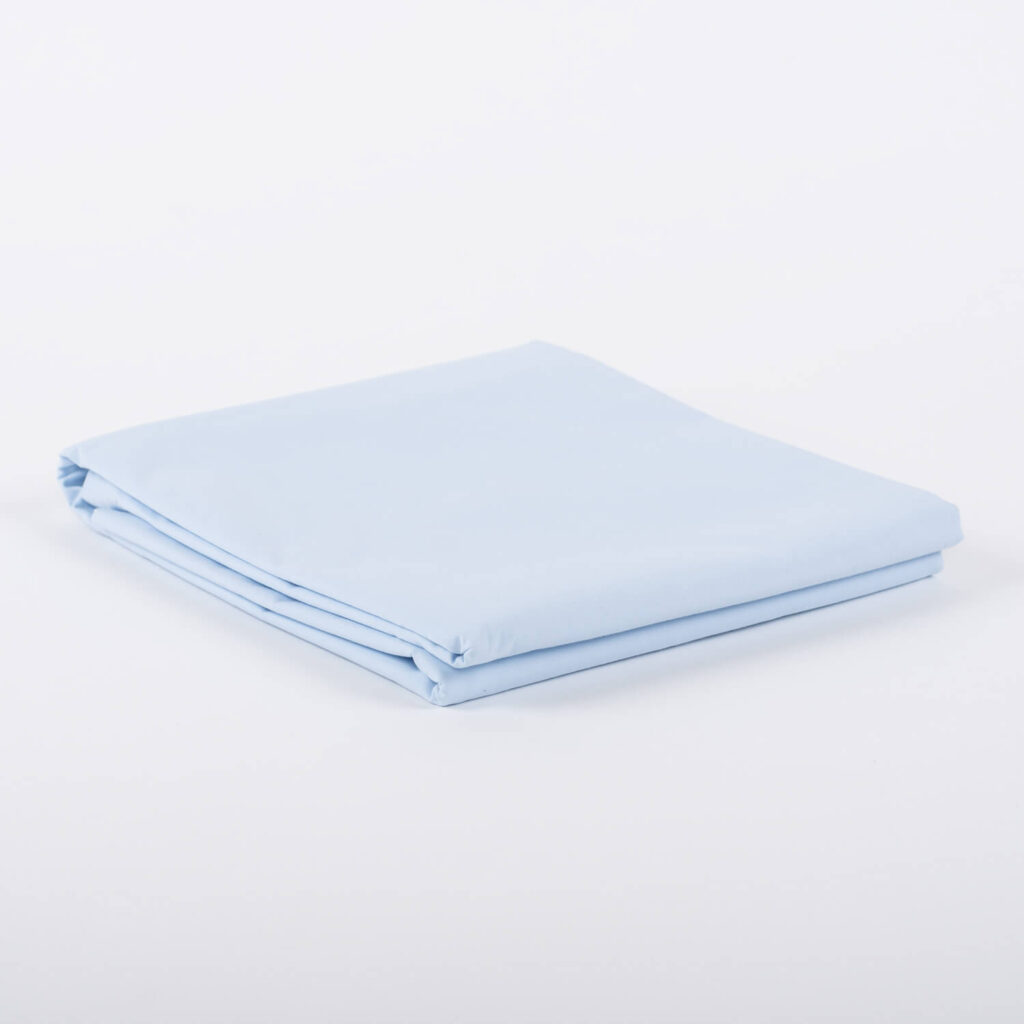
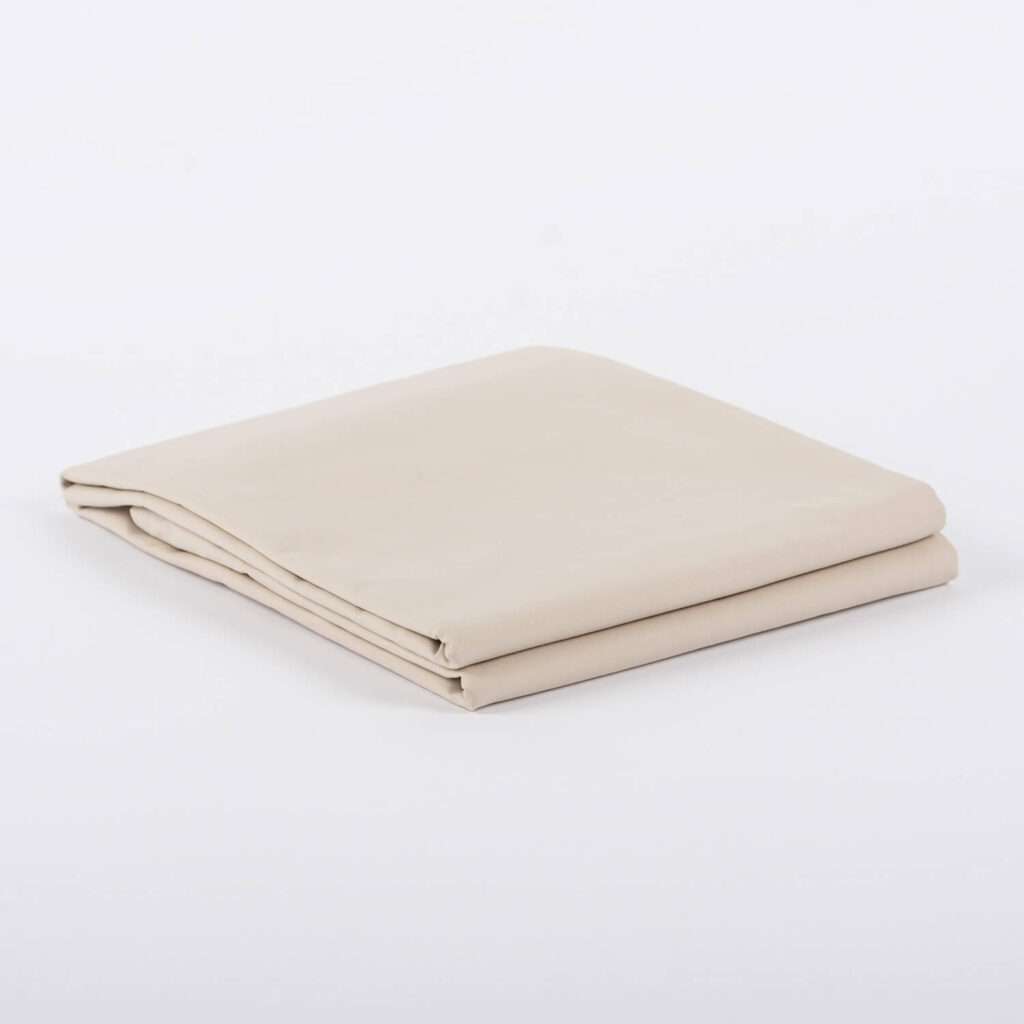
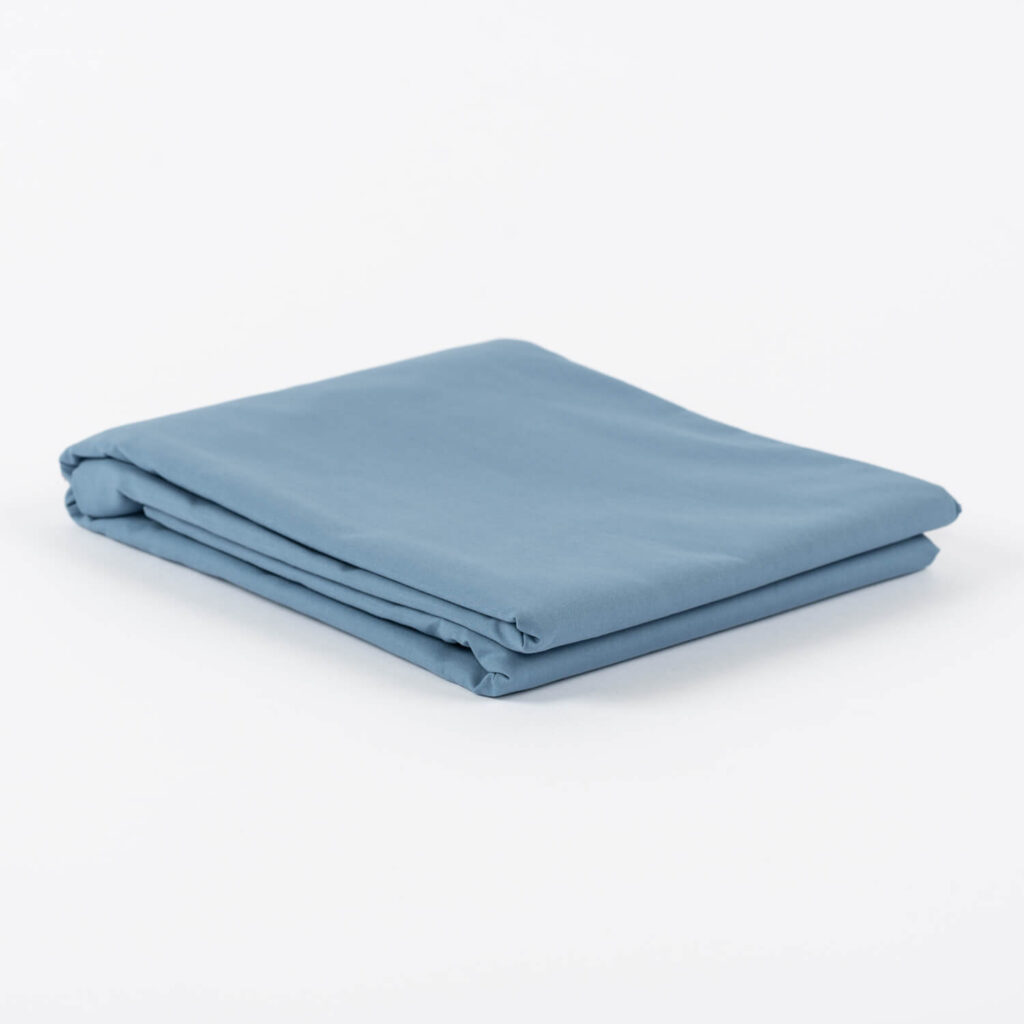
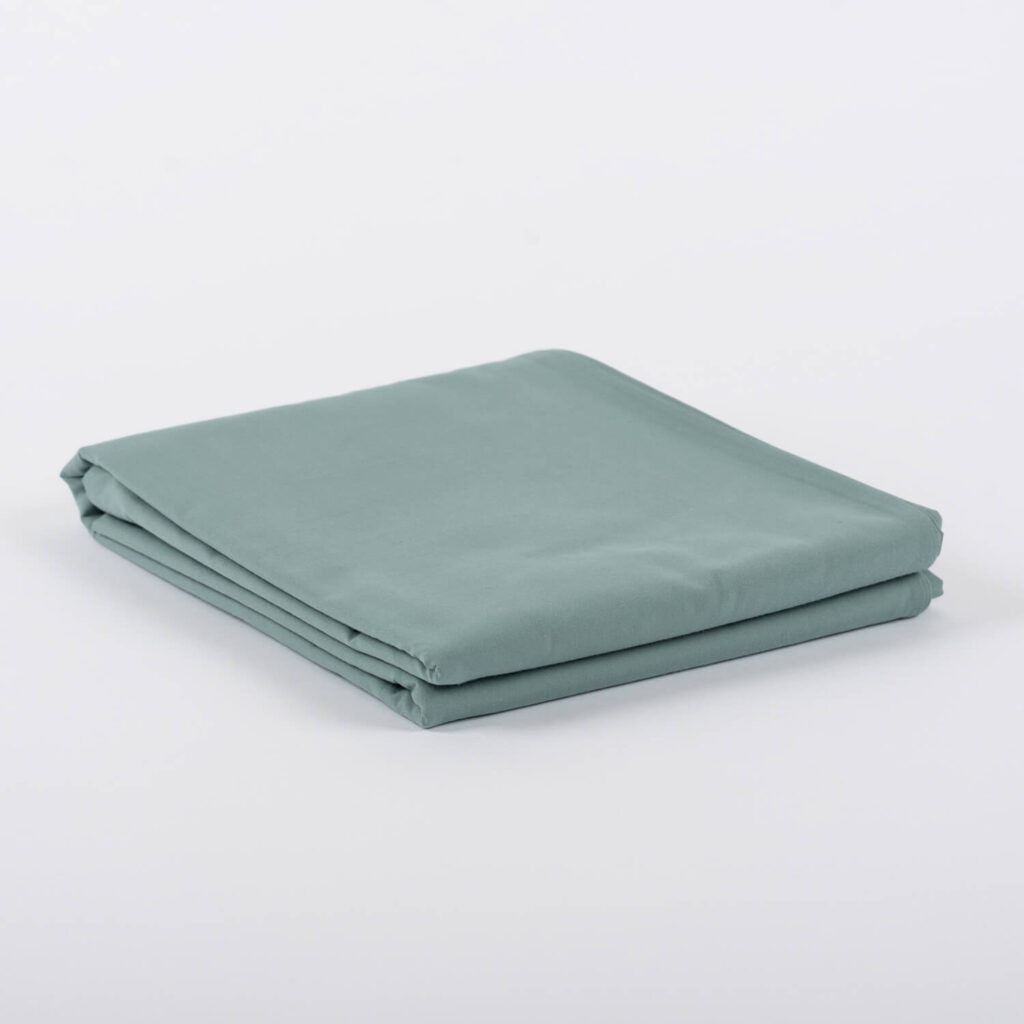
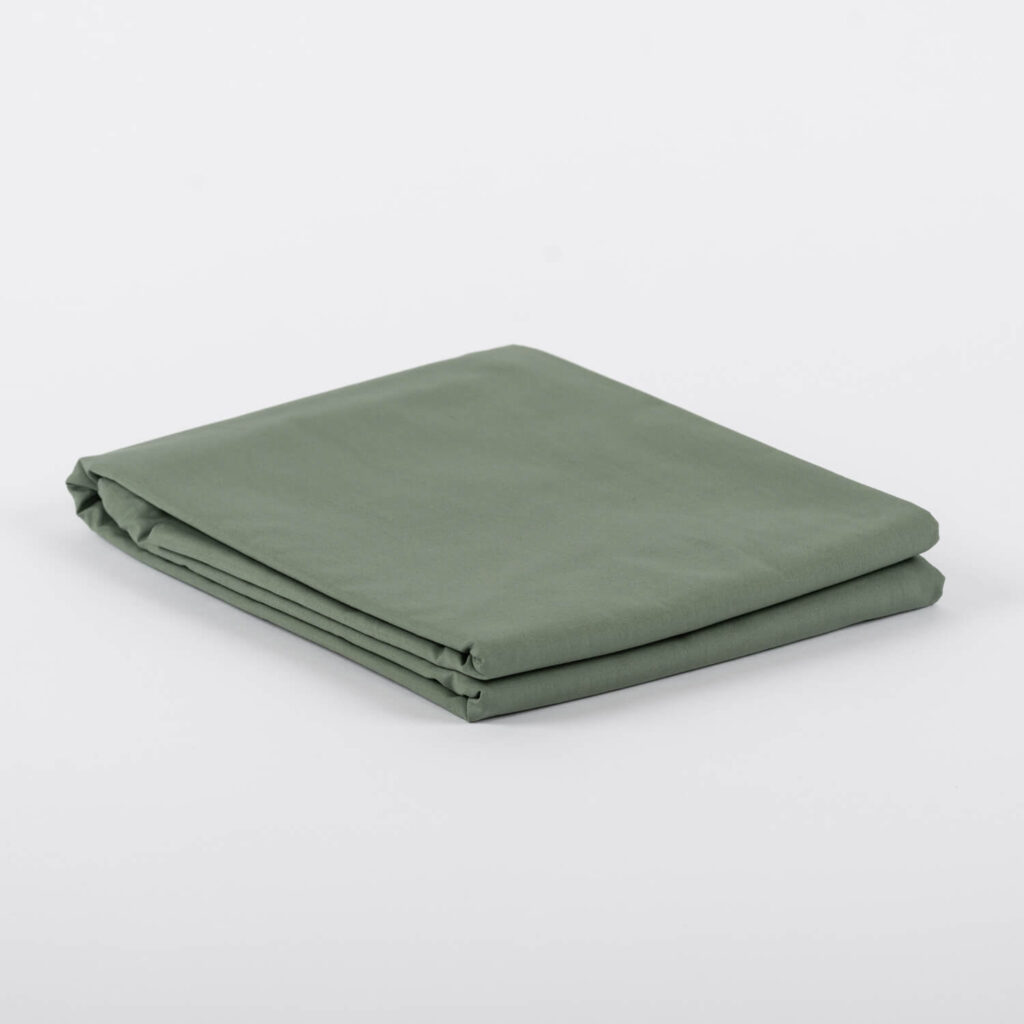
Our percale flat sheets are available in thirteen colours: Pure White, Cream Light Beige, Pearl Light Grey, Azure Light Blue, Aloe Mint Green, Sage Green, Malva Dusty Rose, Cherry Blossom Pink, Ochre Yellow, Denim Grey Blue, Forest Dark Green, Graphite Dark Grey and Night Dark Blue. Cotton sateen comes in Marble White, Taupe Greige and Black, while MicroModal and linen are currently available in white.
As long as the fabric and colour remain available in our collection, the sheet can be reordered as an additional piece or as a replacement. Slight variations in shade may occur between dye batches.
The fitted sheet
As an alternative with a secure fit, our fitted sheet has elastic sewn around the entire edge and is available in 17 sizes. An overview of all sheet types can be found under bed sheets.
Prices and made-to-order production
Percale from €50, cotton sateen from €53, MicroModal from €90, and linen from €97. The price depends on the fabric and size.
Each sheet is made to order in our ateliers.
Frequently asked questions about flat sheets
What is the difference between a flat sheet and a fitted sheet?
A flat sheet is a smooth rectangle without elastic. It is tucked securely beneath the mattress and can also be used as a top sheet. A fitted sheet is shaped to fit the mattress and has elastic sewn around the entire edge.
Which flat sheet size fits my mattress?
For mattresses 80 to 100 cm wide, choose 180×290 cm; for widths of 105 to 120 cm, choose 214×294 cm; for 140 to 160 cm, choose 254×294 cm; and for 180 to 200 cm, choose 294×314 cm. These recommendations apply to mattresses with a height of up to approximately 27 cm.
Can I use the flat sheet as a top sheet?
Yes — between the body and a duvet or blanket, or on its own on warm nights. Choose the width according to the size of the bed and the desired overhang; as a guide, 180×290 cm is suitable for one person.
Do you make flat sheets in custom sizes?
Yes, provided the requested dimensions are technically feasible. Simply provide the width, length and height of your mattress, and we will determine the appropriate sheet size and confirm the price before you place your order.
How do I care for a flat sheet?
Percale and linen can be washed at up to 60 °C, while cotton sateen and MicroModal can be washed at up to 40 °C. The sewn-in care label provides the definitive instructions; further details can be found on the individual product page.
Do “flat sheet”, “top sheet” and “sheet without elastic” mean the same thing?
A flat sheet is a rectangular sheet without elastic. When tucked beneath the mattress, it is used as a bottom sheet; when placed between the body and a duvet or blanket, it is used as a top sheet. “Flat sheet” describes the construction, while “top sheet” and “bottom sheet” describe how the sheet is used.